We attended the official launch event of the German-Ukrainian Network of Universities (DUHN), held in Berlin on 3 and 4 December 2025. More than 100 representatives from universities, politics and higher education institutions in both countries gathered to launch 30 collaborative projects and meet as a network.
Kiel University (CAU) and Kherson State Agrarian and Economic University (KSAEU) cooperate within the network through “Academic Cooperation and Teaching Initiative Kiel-Kherson” (ACTI-K²).
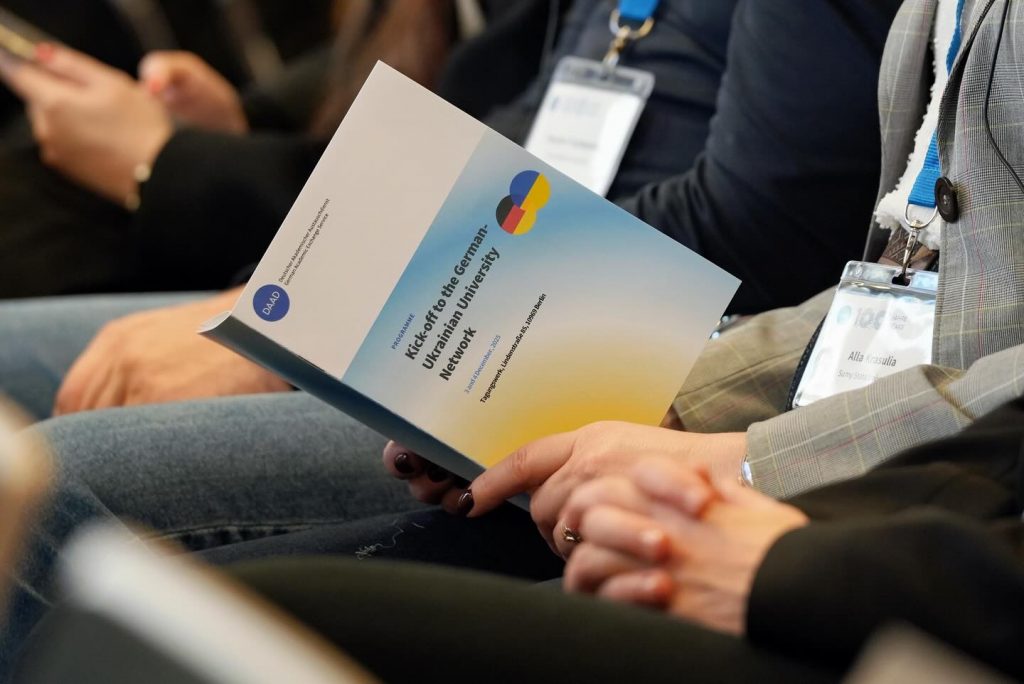
Strengthening academic cooperation
DUHN aims to deepen German-Ukrainian cooperation and support joint academic initiatives and Ukraine’s integration into Europe. Speakers highlighted the need for sustained academic ties while Ukrainian institutions face the effects of Russia’s war of aggression. They also recognised the resilience and reform efforts of Ukrainian universities.
Contributions and project exchange
The programme featured high-level addresses from Prof. Dr. Joybrato Mukherjee, President of the DAAD; Dorothee Bär, Federal Minister for Research, Technology and Space; H.E. Oleksii Makeiev, Ambassador of Ukraine to Germany; and Harald Christ, founder of the Harald Christ Foundation for Democracy and Diversity. In a video message, Prof. Dr. Mykola Trofimenko, Deputy Minister of Education and Science of Ukraine, welcomed the participants and stressed the value of sustained academic cooperation.
Panel discussions and poster sessions gave participants an opportunity to present their projects, learn about other teams’ work and explore potential cooperation within the network.
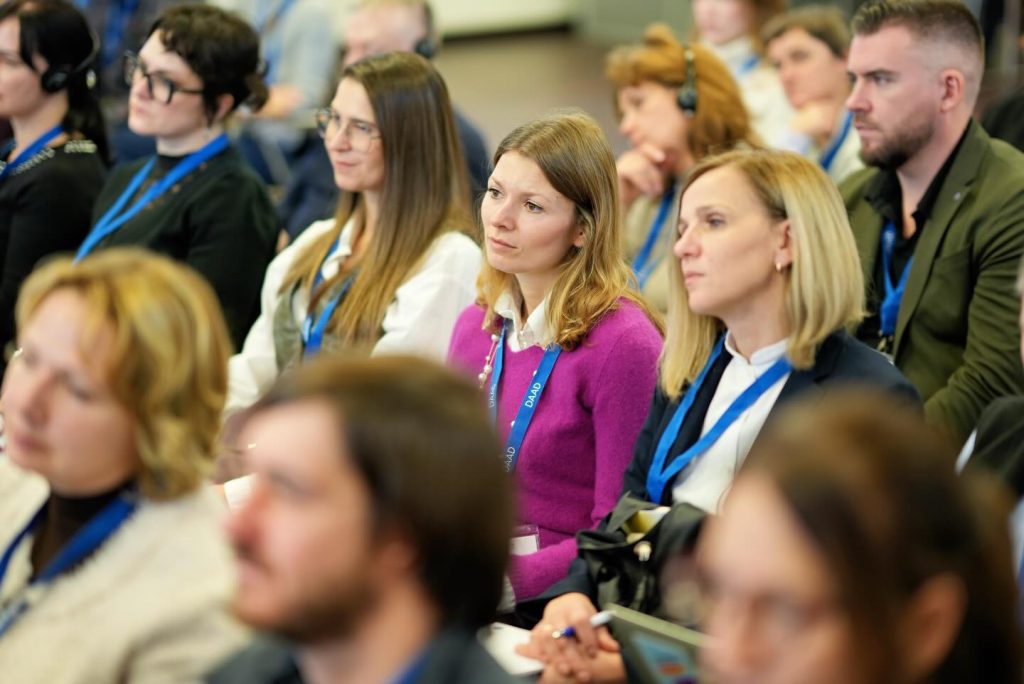
Sustaining the network
Contributions throughout the event emphasised higher education’s role in resilience, reconstruction and innovation. Speakers recognised the work of the German Academic Exchange Service (DAAD) and its member universities in adapting programmes and bringing joint initiatives together under DUHN.
The network is supported by the German Federal Ministry of Research, Technology and Space (BMFTR). We thank the DAAD, the ministry and our German partners for sustaining this cooperation, and colleagues at CAU and KSAEU for developing the academic partnership.
