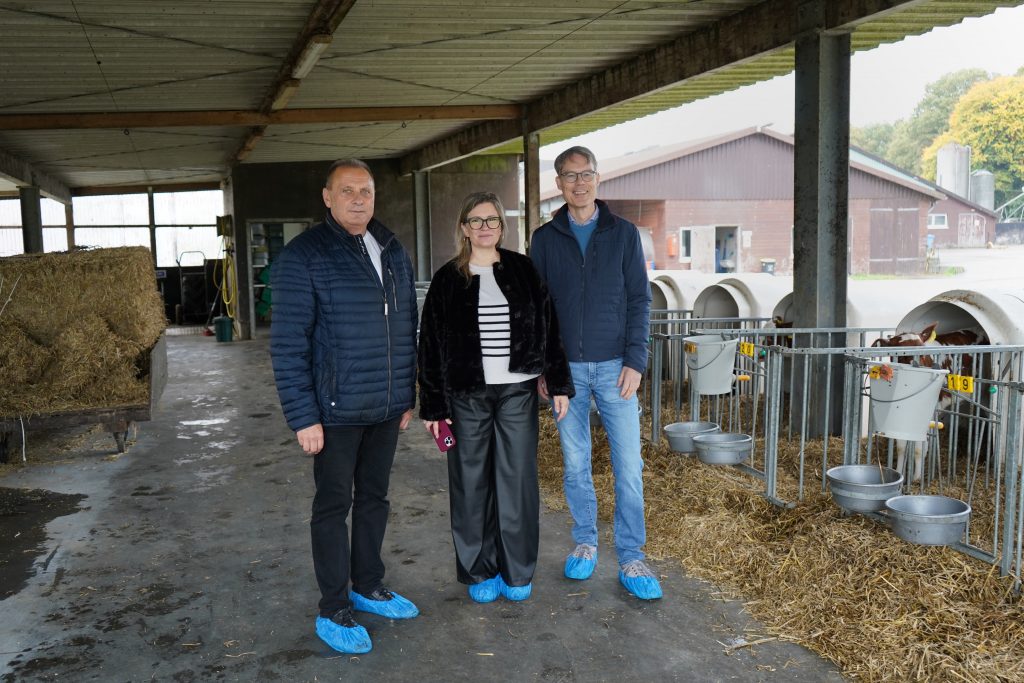
Kiel University (CAU) welcomed a delegation from Kherson State Agrarian and Economic University (KSAEU). Prof. Dr. Kai Carstensen, Head of ACTI-K², arranged a visit to the Karkendamm Experimental Farm of CAU’s Faculty of Agricultural and Nutritional Sciences for Prof. Dr. Viktoriia Hranovska, Vice-Rector of KSAEU, and Prof. Dr. Oleksandr Averchev, Head of the Department of Agriculture at KSAEU. The farm visit took place on 14 October 2025.
Dairy and crop research at Karkendamm
The delegation learned about research in the dairy cattle barn, including breeding for feed intake efficiency, domestic protein and energy crops, methane emissions and bioactive plant compounds.
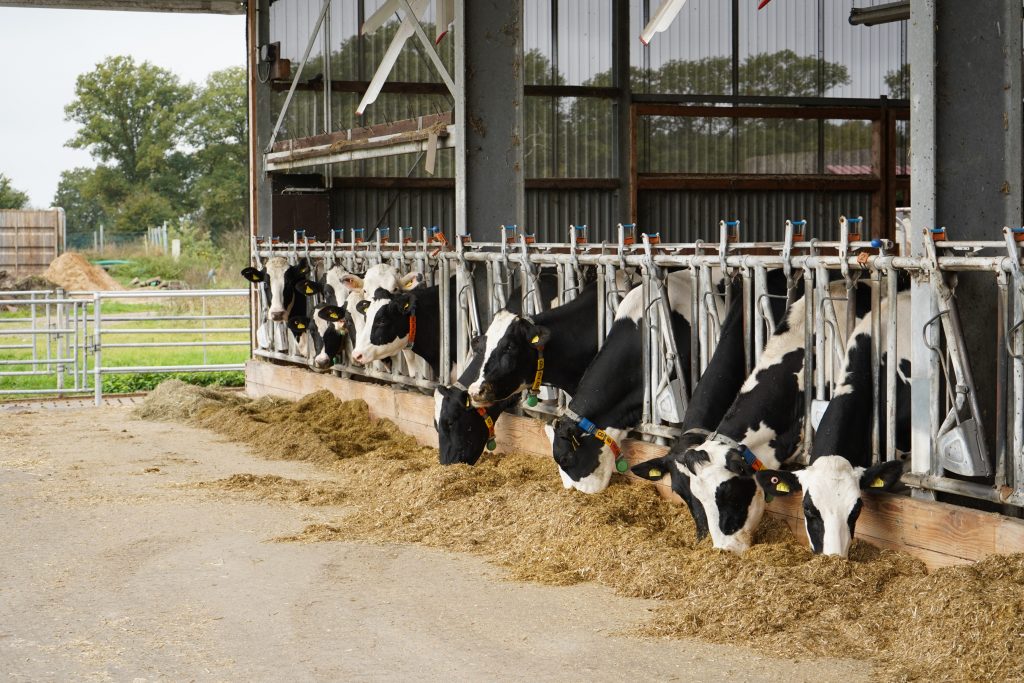
At the time of the visit, the farm accommodated around 200 dairy cows and a further 200 calves and young heifers. The surrounding farmland was used for maize, grass, winter wheat, winter barley, winter rye, soybeans, rapeseed and forage production.
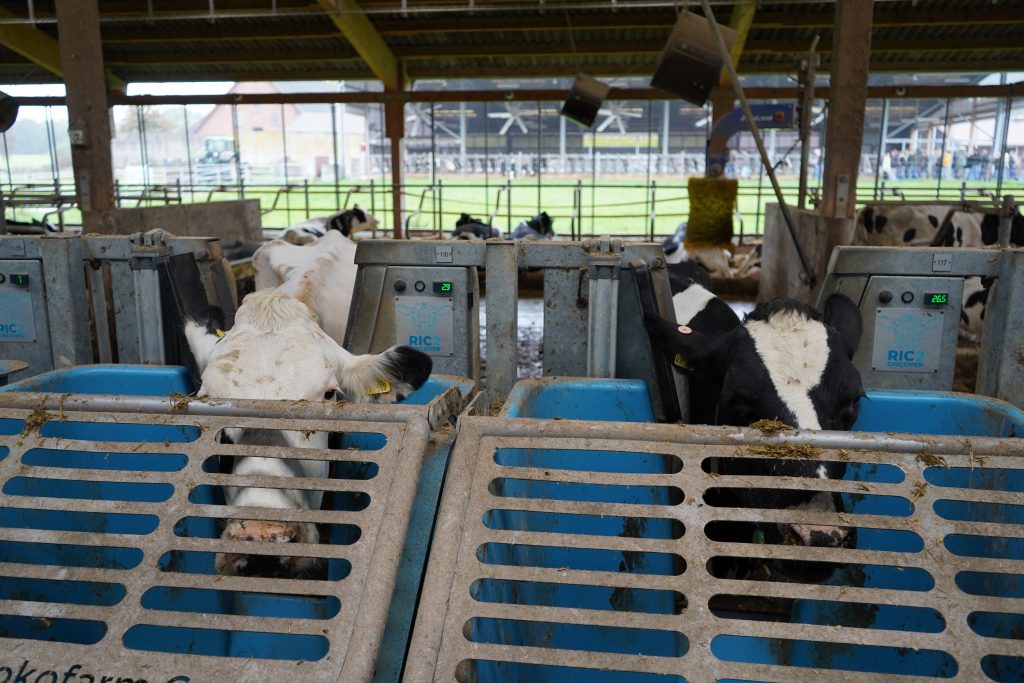
A weighing-trough system records the feed intake of individual cows, while automated slurry management measures quantities separately for each animal group. This allows researchers to follow nutrient flows through feed, milk and manure. Automated weighing and milking systems collect milk-yield and feed-consumption data, supported by weekly sampling of manure composition.
A fibre-optic connection supports data transmission and equipment maintenance. Motion sensors and transponders on the cows’ legs record activity and behaviour, providing data for further analysis.
Research data and academic exchange
Individual digital profiles bring together information on genetic characteristics, animal health and milk-production efficiency. These data support research on animal welfare, animal health and nutrient use.
During the visit, the delegation and German researchers compared their research methods and experimental approaches. We thank the hosts at CAU’s Faculty of Agricultural and Nutritional Sciences and colleagues at KSAEU for this exchange.
ACTI-K² is supported by the German Academic Exchange Service (DAAD) within the German-Ukrainian Network of Universities (DUHN), with funding from the German Federal Ministry of Research, Technology and Space (BMFTR).
